The reading room / Nights in
Rainy-day activities for adults at home: a better plan than refreshing the forecast
The walk is cancelled. The windows are making a persuasive argument. Choose something that fits your energy, rather than turning a wet afternoon into a productivity competition.
Today’s forecast: indoors, with a chance of finding the good biscuits.
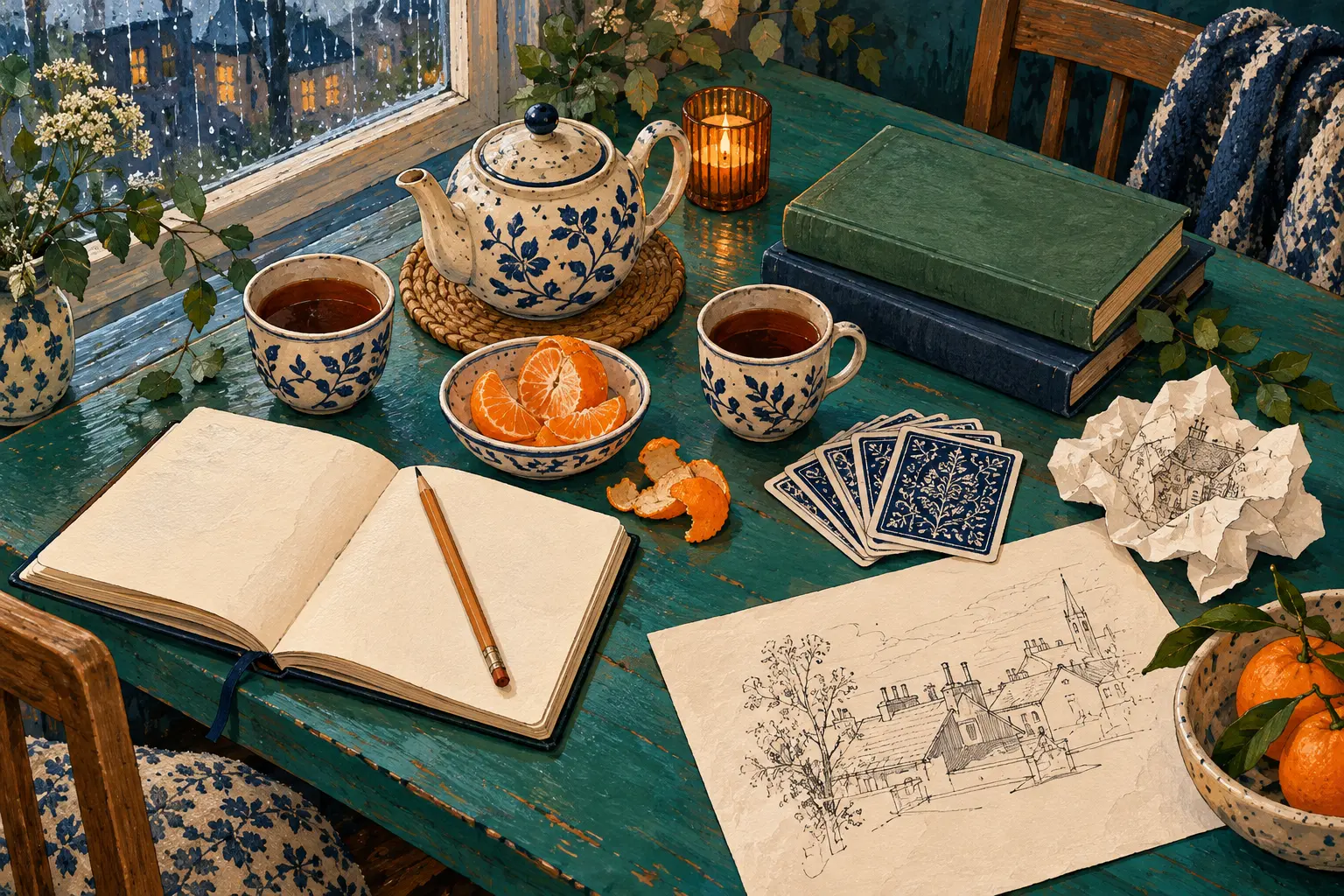
Pick by energy, not ambition
Ask whether you want to rest, make something or do something together. Then choose an activity that can start with what you already have. The best rainy-day idea is not much use if it requires a drive to buy seventeen specialist supplies.
Give yourself a small starting point: one recipe, one sketch, one round or one chapter. You can continue if it catches your interest. There is no prize for finishing an entire new hobby by tea time.
Three quiet options
A reading hour with a proper stopping point
Choose a chapter, short story or essay and put a drink within reach. Read alone or alongside someone else, then share one interesting detail. This works without synchronising an entire book.
A ten-object sketch
Pick everyday objects and give each a quick drawing. Focus on noticing shape, not producing a portrait worthy of a gallery. A mug can survive being drawn badly.
A small memory collection
Choose five old photographs or objects, write where they came from and tell their stories. Keep it a small collection so it stays enjoyable rather than becoming a full loft-clearance operation.
Three things to make
A pantry cooking challenge
Choose a meal from ingredients you already have, respecting dietary needs and ordinary food-safety instructions. Make the challenge about using them well, not about surprising someone with an ingredient they avoid.
A miniature paper town
Draw a street, fold a few simple buildings and give them improbable businesses. A suspiciously well-funded village haberdashery is a perfectly respectable starting point.
A collaborative short story
Take turns adding two sentences. Agree on a setting and an ending length first. A complete silly story is more satisfying than the opening chapter of a project nobody requested.
Three shared activities
A familiar game with a small twist
Use cards or a board game you own. If you change a rule, agree it in advance and keep the change simple. Retroactive rule changes remain suspicious in all weather.
A cooperative mystery
Choose a case that fits your player count, reading preferences and equipment. It gives the group a shared problem to discuss. Our format guide explains the options if you are new to them.
A home listening session
Each person picks a few tracks and explains the choice, using music you can access. Keep the volume comfortable and the commentary optional. This is a listening session, not a competitive lecture.
Choose one and make the start easy
The two-minute decision
Each person names one option they would enjoy and one they would rather skip. Choose from the overlap, gather the essentials and set a natural stopping point. If you are alone, choose the option with the least setup for the energy you have.
Some activities use screens and some do not. Decide which you want rather than treating either as automatically better. For a quieter evening as a pair, see screen-free date nights. For a group of readers, try a book-club social.
Keep the afternoon human
You can abandon an activity that turns out to be tedious. You can also spend the afternoon doing something familiar because that is what you enjoy. The list is there to reduce indecision, not to grade how interesting you are indoors.
If you do find something you both like, note what made it work: the length, the conversation, the amount of preparation or the shared task. That is useful information for the next time the weather files an objection.
A few useful answers
Are these activities free?
Many use ordinary things you may already own. Printing, ingredients, games or media can add costs, so choose around what is available.
What works for one person?
Reading, sketching, a small memory project or a simple cooking challenge can all work alone. Choose the activity and length that fit your energy.